A chemical building block is a starting component used to construct another molecule. Choose it for the exact reactive handle, substitution pattern, protecting-group state and stereochemistry required by your route. A catalogue category alone does not demonstrate compatibility with your intended reaction.
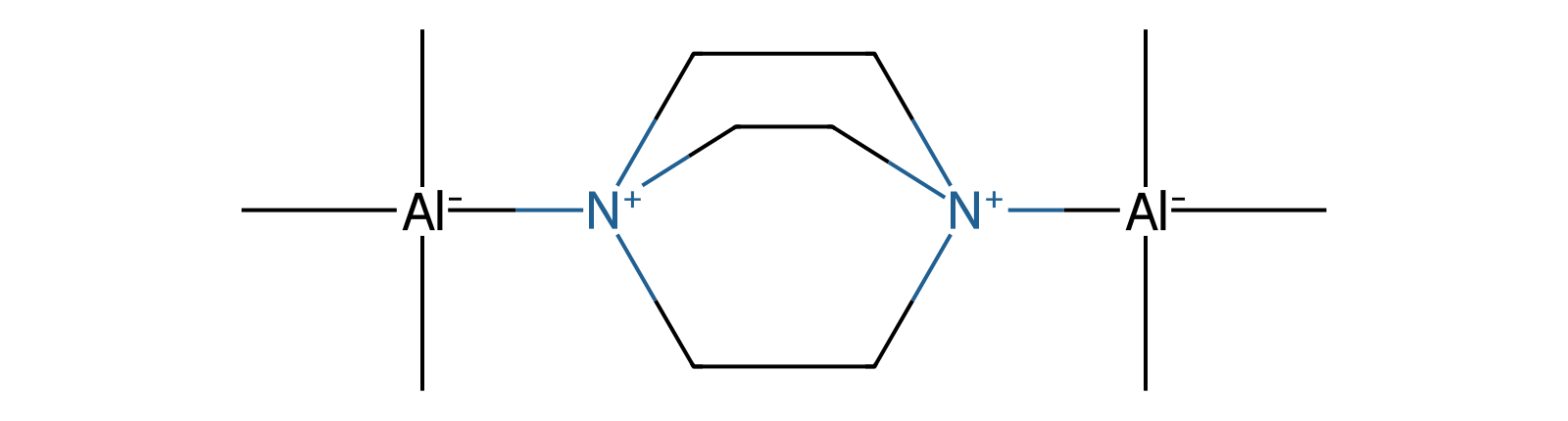
Start with the required structure and reactive handle
Write down the fragment you want to introduce and the bond you intend to form. Then identify which atoms and functional groups the purchased component must contain. Two compounds with similar names or a shared ring system may have very different attachment positions or protecting groups.
A structure search is often more useful than a broad text search when regioisomers matter. Start with an exact structure if it is known. Use a substructure query when the scaffold should be retained but substituents can vary, then inspect the full hit structures before choosing.
Protecting groups, salts and stereochemistry matter
Check whether the listed material is a free acid, free base, salt or protected derivative. Note the number and position of reactive groups, including groups that might compete in your intended transformation. Keep any required stereochemical specification explicit; an unspecified catalogue structure should not be treated as a particular enantiomer.
A building block with a useful scaffold can still need route-specific assessment. Provide your requirements to the HTS team rather than assuming that a functional-group label guarantees a reaction outcome. Chemical suitability and documentation should be reviewed against your project.
Sources: RDKit Book: molecular representations and stereochemistry
Explore scaffolds and then narrow the shortlist
HTS lists ≈ 13,000 building-block entries in the current in-stock collection. Other collection categories include fluorinated heterocycles and spirocyclic entries; these categories can overlap. The counts describe catalogue entries, not a set of mutually exclusive or unique molecular structures.
Select Building blocks under Compound type and use the structure and property filters to refine your selection. The calculated molecular descriptors help organise chemical space. They do not establish chemical reactivity, synthetic yield or biological activity.
What to include in a building-block enquiry
For larger selections, ask for volume terms. For virtual entries, request a feasibility assessment before treating the material as available for your synthesis plan.
- Compound ID and an unambiguous structure, including the required isomer.
- Amount needed now and any anticipated follow-up requirement.
- Required salt or free form, protecting-group state and purity documentation.
- Any excluded functional groups or substitution patterns in your selection brief.
- Whether you can accept an available analogue if your first choice is unavailable.
Common questions
Is a screening compound automatically a building block?
No. Screening status and synthetic utility are different descriptions. Inspect the structure and the intended chemistry instead of inferring suitability from a library label.
Can I search for a particular ring system?
Yes. Use a substructure query for the ring system and inspect substitution positions and reactive groups in the returned structures.
Sources & further reading
YOUR NEXT STEP
Find chemistry to evaluate.
Explore the catalogue or send your IDs, quantities and specifications for a tailored quotation.
Catalogue information is distinct from experimental activity data. Counts refer to entries; categories can overlap. Availability, documentation and synthesis feasibility are confirmed individually. Questions or corrections? Email the team.